

Cart
0
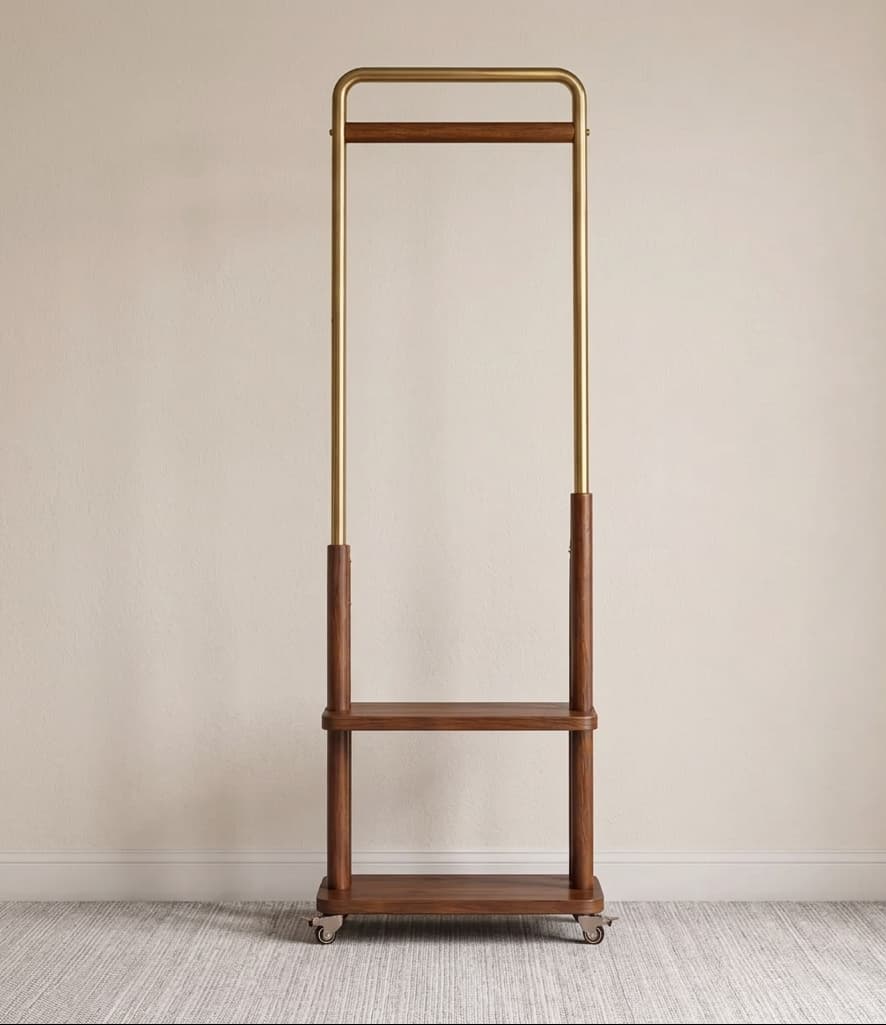
When a coat rack fails, it's rarely the hooks—it's the frame. And frame failure is a material story. This guide compares solid wood vs. metal coat racks on the properties that determine how long a piece lasts in a real home: load, finish, humidity response, and repairability. It pairs with our coat rack buying guide and our coat rack vs. hall tree comparison.

The Two Materials, Defined
Solid wood (we use rubberwood and walnut-accent hardwoods) is a natural, renewable frame with grain and warmth. Metal is typically powder-coated steel tubing—slim, strong in tension, and modern. A hybrid pairs a steel skeleton with a wood shelf or top, like our metal-and-wood rolling rack.
Durability Scorecard
| Property | Solid Wood | Metal |
|---|---|---|
| Tensile strength | Good | Excellent |
| Resists dents | Moderate | High (coated) |
| Humidity response | Expands/contracts; can warp | Stable |
| Refinishable | Yes (sand & oil) | No (re-coat only) |
| Repairable | High (glue, screw, patch) | Low (weld/replace) |
| Visual warmth | High | Low–modern |
| Typical load rating | Moderate–high | High (e.g., 220 lb) |
Weight Capacity: Read the Rating
Metal's edge is consistency: a steel tube has predictable load limits, and heavy-duty racks such as our vented wood rack are rated to 220 lb. Wood's capacity depends on joint quality and species; a well-joined hardwood frame is plenty for daily coats but less suited to hanging many saturated winter jackets long-term. Use 80% of the rated load as your daily ceiling.
Finish & Scratch Resistance
Powder-coated metal shrugs off scuffs; a chip exposes steel to rust, so touch up promptly with a matching paint. Lacquered wood hides minor marks and can be re-oiled, but water left sitting can ring the surface—wipe promptly. For messy entries, a black faux-leather-top bench wipes clean of muddy prints and pairs with either frame material.
Humidity & Climate
Wood moves with humidity—tighten bolts seasonally and keep racks off heating vents and out of direct sun. Metal is dimensionally stable, making it the better pick for unconditioned mudrooms, garages, and basements. In a climate-controlled living entry, wood's movement is negligible. If you live somewhere with big seasonal swings, metal or hybrid reduces maintenance.
Repairability & Lifecycle
Wood wins on repair: a loose joint is glue-and-clamp; a scratch is sand-and-oil. Metal needs welding or part replacement. Over a 10-year horizon, a quality wood rack you maintain will often outlast a cheap metal one you can't fix. This is the single biggest reason we lead with wood in living spaces.
Environmental Footprint
Solid wood from managed forests is renewable and stores carbon; at end of life it composts or burns clean. Steel is recyclable but energy-intensive to produce. Hybrids split the difference. If sustainability ranks high for you, a repairable wood frame is the lower-lifetime-impact choice.
Allergens & Cleaning
Both materials clean with a damp cloth, but wood's grain can harbor less surface dust than textured coatings if oiled smoothly. Neither harbors allergens if wiped monthly—more a maintenance habit than a material verdict.
When the Hybrid Wins
Want metal's strength with wood's look? A hybrid rolling rack uses a steel frame for load and a wood shelf for warmth—ideal for laundry-to-entry workflows where you move the piece. The steel carries the weight; the wood keeps it from looking like garage equipment.
Warranty & Expectations
Expect a well-made wood rack to last 10+ years with twice-yearly bolt checks; metal 8–12 years if the coating stays intact. The killer is neglect: an untightened wood joint loosens, an un-touched metal chip rusts. Both are preventable with five minutes a season.
Which Should You Buy?
- Buy wood for visible living entries, bedrooms, and offices where warmth and repairability matter.
- Buy metal for utility spaces, heavy loads, and modern décor; confirm a load rating.
- Buy hybrid when you want both and you move the piece often.
Product starters: solid wood tree, hybrid roller, and the 220-lb wood rack.
Care by Material
| Task | Wood | Metal |
|---|---|---|
| Dusting | Soft cloth | Soft cloth |
| Deep clean | Damp cloth + dry | Damp cloth + dry |
| Protection | Monthly oil | Touch chips immediately |
| Hardware | Tighten seasonally | Check wheel locks |
Frequently Asked Questions
Is wood or metal stronger for a coat rack?
Metal has higher and more predictable tensile strength; a 220-lb steel-frame rack out-lifts most wood. But well-joined hardwood handles daily coats fine.
Do wood coat racks warp?
Only with moisture or heat exposure. Keep them in climate-controlled rooms and away from vents; tighten joints seasonally.
Which lasts longer?
Over a decade, a maintained solid-wood rack often outlasts a cheap metal one because wood is repairable. A quality metal rack also lasts if coated and dry.
Are hybrid racks stable?
Yes—the steel frame carries load while wood adds looks. Choose lockable wheels for safety when loaded.
Which is better for a mudroom?
Metal or hybrid—both resist humidity better than wood in unconditioned spaces.
Is wood more sustainable than metal?
Generally yes over the full life cycle if sourced from managed forests and kept repairable; steel is recyclable but energy-heavy to make.
Can I refinish a wood coat rack?
Yes—sand lightly and re-oil or re-lacquer. That is wood's biggest longevity advantage over metal.
Do metal racks rust?
Only if the coating chips and is left untreated. Touch up chips promptly and keep them dry.
Which looks more expensive?
Quality walnut-accent wood reads premium; brushed/coated metal reads designer-modern. Both can look high-end at the right finish.
Final Takeaway
Wood for warmth and repair; metal for load and utility; hybrid for both. Match material to the room, not the trend. Browse the entryway collection to compare, and revisit the buying guide before you choose.
By the TAITIY Furniture Team.
