

Cart
0
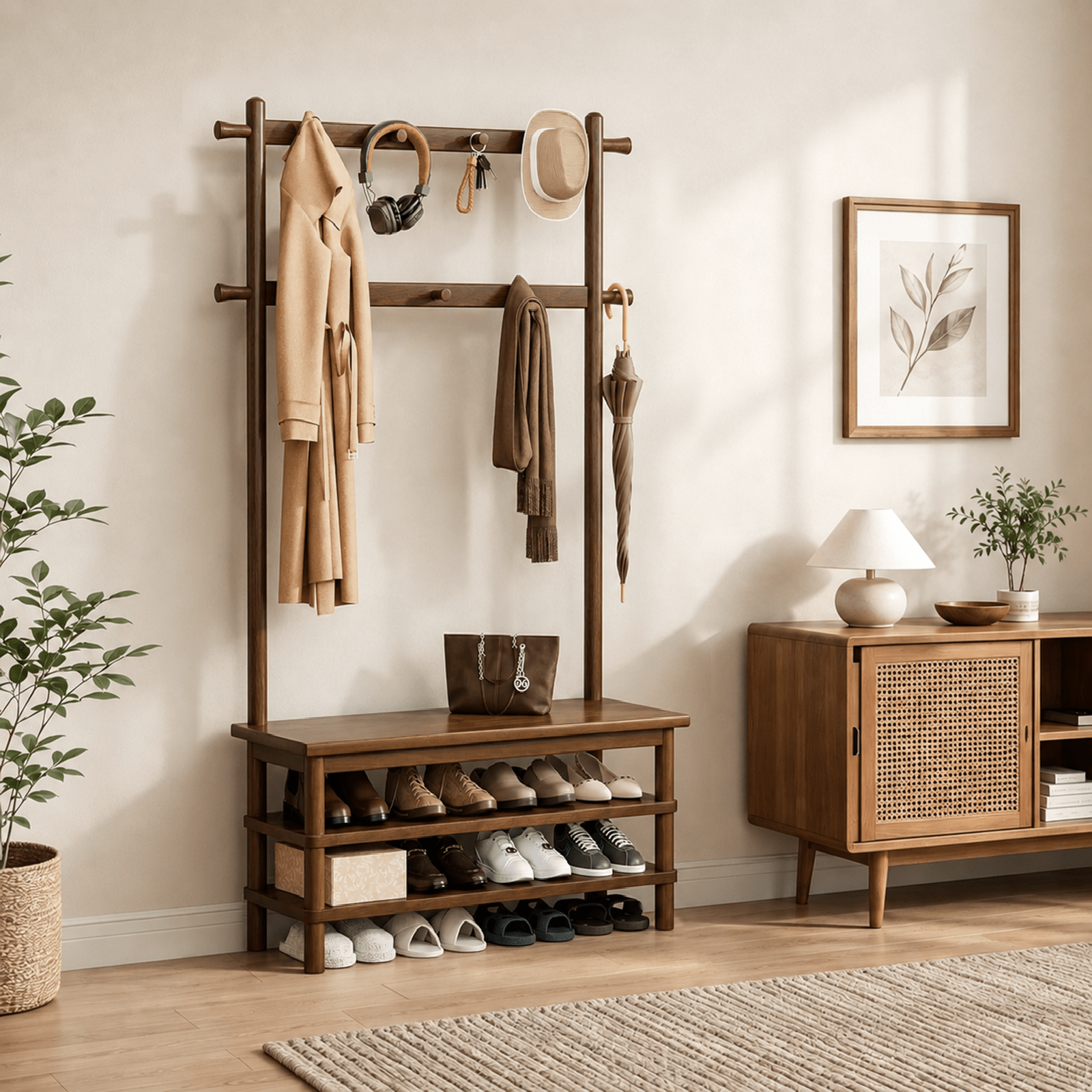
A coat rack is the quiet workhorse of a tidy home. It is the first thing guests see and the last thing you touch on the way out, yet most buyers pick one on looks alone—then wonder why it wobbles, sheds varnish, or cannot hold a winter wardrobe. This coat rack buying guide is built for people who want the decision made on facts: type, material, weight capacity, footprint, and where it will actually live. Along the way we link our most popular 11-hook hall tree and 10-hook tree stand so you can move from reading to buying in one sitting.
Why Entryway Storage Deserves a Real Decision
The entryway sets the tone for the entire home and absorbs more daily traffic per square foot than any other room. Industry surveys of home buyers consistently rank storage near the front door among the top three most-wanted features, ahead of many cosmetic upgrades. A well-chosen coat rack reduces clutter, protects jackets and bags from floor damage, and turns a bottleneck into a functioning drop zone. The wrong one does the opposite: it tips, it scratches the wall, and it becomes a pile you step around. Treat this purchase like a small piece of furniture, not an afterthought.

The Four Types of Coat Racks
| Type | Best for | Footprint | TAITIY example |
|---|---|---|---|
| Freestanding tree / pole | Small entries, bedrooms, offices | ~14–18" diameter | 10-hook tree stand |
| Hall tree (hooks + bench + storage) | Mudrooms, family entries | ~35" wide | 11-hook hall tree |
| Rolling clothes / garment rack | Walk-in closets, laundry, staging | Varies, mobile | metal & wood rack w/ wheels |
| Rotary / carousel | Corner spaces, high capacity | ~18" diameter | 9-hook rotary |
Tree stands are the smallest footprint and easiest to relocate—ideal for renters. Hall trees trade floor width for three functions at once. Rolling racks shine where you stage laundry or rotate seasonal clothing. Rotary racks use a circular footprint to pack hooks into a corner. Wall-mounted racks are the fourth option but need studs or anchors; for renters we generally recommend freestanding pieces you can take with you. For a direct comparison of the top three, see our coat rack vs. hall tree breakdown.
Coat Rack vs. Hall Tree vs. Entryway Bench
The fastest way to choose: count what you need to store. Just coats and hats? A tree or rotary rack wins on floor space. Coats plus shoes plus a place to sit and lace up? A hall tree with a shoe bench is the only one that does all three. Shoes only, no hanging? An entryway shoe bench is enough. Our full comparison lays out the trade-offs with a decision table.
Materials: Solid Wood vs. Metal vs. Hybrid
Material drives longevity more than price. Solid wood (we use rubberwood and walnut-accent frames) reads warm, hides scuffs, and is easy to re-finish; it is the right call for visible living spaces. Metal (typically powder-coated steel tubing) is slim, modern, and often rated for higher loads. Hybrid metal-and-wood frames pair a steel skeleton with a wood shelf or top—the best of both for rolling racks. We go deep on this in our wood vs. metal coat rack guide.
Weight Capacity & Stability: The Spec People Skip
A coat rack fails at the base, not the hooks. Three physics facts matter: (1) a wide or weighted base lowers the center of mass—our triangular-base rack spreads load across three points; (2) height-to-base ratio should stay low; a tall, narrow pole tips easier than a squat bench; (3) a stated load rating tells you the safety margin. Heavy-duty models such as our vented wood rack are rated to 220 lb. If you will roll it, choose lockable wheels so it stays put when loaded. As a rule, never load a rack past 80% of its rated capacity for daily use.
How to Size a Coat Rack for Your Space
Use this worksheet before you buy:
- Measure the landing zone (width × depth) and note fixed obstacles: doors, stairs, vents, baseboards.
- Check ceiling height. Tall tree stands need 60"+ of vertical clearance; measure from floor to the lowest overhead fixture.
- Leave a traffic lane. Keep 30–36" of clear floor in front so two people can pass.
- Count users. A 2-person household can share a 5-hook rack; a family of four wants 9–11 hooks (our hall tree has 11).
- Mind the swing. Doors and stairs nearby? A rotary or corner rack hugs the wall better than a wide bench.
Hooks, Shelves & Organization
More hooks is not automatically better—spacing matters so bulky winter coats do not overlap and suffocate each other. Look for a mix of hook heights: upper tiers for long coats, lower tiers for kids' jackets, bags, and leashes. Shelves add out-of-sight storage for baskets, scarves, or a rack with a built-in basket. For tiny entries, our small-entryway organization guide shows how to stack function vertically instead of spreading it wide.
Finish, Durability & Assembly
Finishes should match use: a walnut or white lacquer suits living spaces; a black faux-leather top on a shoe bench wipes clean of muddy prints. Check assembly: many of our racks are tool-light, and rolling models arrive ready to roll. If you move often, prioritize lockable-wheel designs. Read the assembly rating too—some "easy" racks still need a second person to square the frame.
Room-by-Room Placement
- Front entry / mudroom: a hall tree or bench-rack combo (seating + storage).
- Bedroom: a slim tree or 5-hook wood rack for tomorrow's outfit.
- Home office: a rotary or corner rack keeps a blazer within reach.
- Laundry / staging: a rolling metal-wood rack moves with the workflow.
- Rental: any freestanding piece with no wall anchors; a tree stand is the classic take-with-you pick.
Childproofing & Safety
If toddlers live with you, anchor freestanding racks to the wall with the included anti-tip kit, keep heavy items on lower hooks, and avoid placing the rack where a child could climb it as a ladder. Hall trees with a wide bench are inherently more stable than narrow poles—another reason they suit family entries.
Care & Maintenance Schedule
Wood likes a routine: dust weekly with a soft cloth, wipe spills immediately, and apply a light furniture oil monthly to prevent drying. Keep racks off direct heat and out of prolonged sunlight to avoid finish fade. Metal only needs a dust and an occasional touch-up of any chipped coating. Seasonal task: tighten every bolt each spring and fall—wood expands and contracts with humidity, and screws drift. A 5-minute schedule twice a year adds years of life.
Sustainability & Material Sourcing
A repairable solid-wood rack is the lower-waste choice over its lifetime: a loose joint is glue-and-clamp, a scratch is sand-and-oil, versus a welded metal frame you likely discard. If you choose metal, look for powder-coated (low-VOC) finishes and recycle the frame at end of life. Hybrid frames split the difference and often last longest because the steel carries the load while wood stays protected.
Common Mistakes Buyers Make
- Buying on height alone and ignoring base width.
- Counting hooks but not checking spacing for winter coats.
- Skipping the load rating on heavy garments.
- Forgetting the traffic lane and blocking a doorway.
- Choosing wall-mounted in a rental that forbids anchors.
The Professional Buying Checklist
- Decide type from storage need (coats only vs. coats + shoes + seating).
- Confirm footprint fits the landing zone with a 30"+ traffic lane.
- Pick material for the room (wood for living spaces, metal for utility).
- Check load rating and base stability (wide / triangular / weighted).
- Count hooks for all users, including kids and guests.
- Choose finish for cleanability and décor.
- Confirm assembly effort and mobility (wheels + locks if you move it).
- Set a budget: $140 (tree) → $240 (hall tree) → $390 (upholstered bench).
- Verify anti-tip provisions if you have children.
- Plan a twice-yearly bolt-tightening reminder.
Frequently Asked Questions
What is the most stable type of coat rack?
A wide or triangular weighted base is most stable. Our triangular-base rack and low-profile hall trees resist tipping better than narrow poles.
How many coats can a coat rack hold?
It depends on hook count and load rating, not just hooks. A 10-hook tree handles ten light garments; a 220-lb rated rack holds heavy winter coats plus shelves.
Is solid wood or metal better for a coat rack?
Wood suits visible rooms and is refinishable; metal is slimmer and often higher-capacity. Hybrids combine both. See our material comparison.
Can a coat rack work in a small apartment?
Yes—use a tree, rotary, or corner rack and go vertical. Our small-entryway guide covers it.
Do I need wall anchors?
Only for wall-mounted racks. Freestanding models need no anchors—better for renters.
Are rolling coat racks stable when loaded?
They are if they have lockable wheels and a low center of gravity, like our vented wood rack.
How tall should a coat rack be?
Most freestanding racks are 60–70" tall. Ensure clearance below ceilings, light fixtures, and shelves.
What is the best coat rack for a mudroom?
A hall tree with bench and shoe storage—our 11-hook model is purpose-built for it.
How do I stop a coat rack from scratching the wall?
Keep 2–3" of clearance, add felt pads to any wall-touching points, and anchor if needed.
Should I buy one big rack or two small ones?
For families, two zones (a hall tree by the door, a tree in the bedroom) spreads morning congestion better than one overloaded piece.
Can I use a garment rack as a coat rack?
Yes—a rolling metal-wood rack doubles as both, especially in studios.
Final Takeaway
Choose by storage need first, material second, and stability third. Start with our 10-hook tree stand for small spaces or the 11-hook hall tree for a full drop zone, then browse the complete entryway collection.
Written by the TAITIY Furniture Team. We design and ship entryway furniture and update this guide as we learn what actually holds up in real homes.

